
The Art of BankCraft™
BankCraft Classroom
Access Is Part of the Account
A useful banking system has to be reachable where you are.
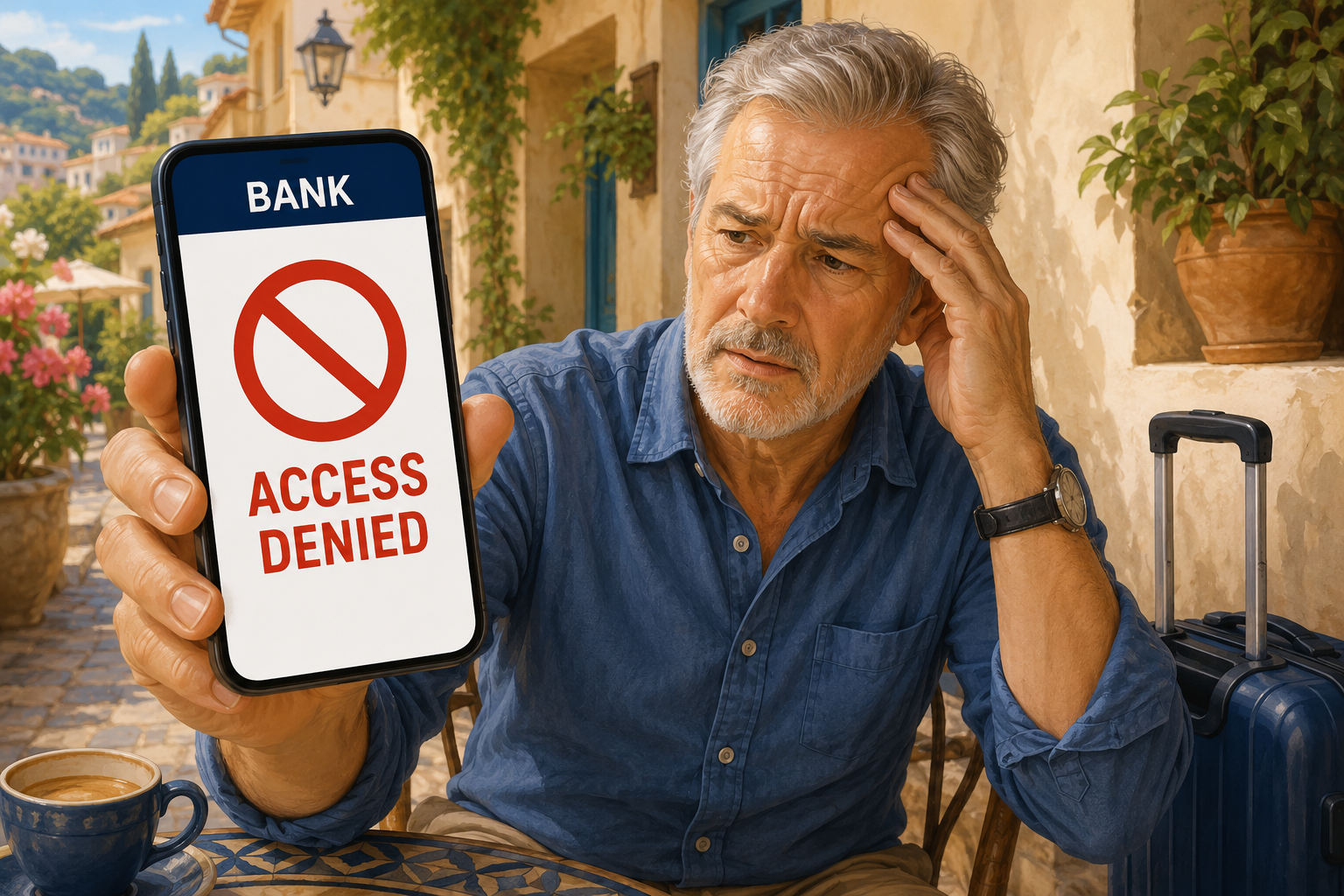
The account has to work where you are.
An account can look excellent at home and become difficult to use while traveling. The rate, the app, and the transfer limit do not help much if you cannot sign in or approve a payment.
Access is part of choosing the institution’s job. If you travel, evaluate the website, mobile app, authentication, and support as seriously as you evaluate the APY.
Access Is Part of the Account
A VPN is not a guarantee against geo-blocking.
When you sign in, a financial institution may evaluate far more than your username and password. It may examine your country, IP address, Internet provider, device, browser, time zone, and whether the connection appears to come from a commercial VPN or hosting network.
Geo-blocking happens when an institution restricts access because of one or more of those signals. A VPN can make your connection appear to originate in the United States, but it does not make the connection invisible. Banks may recognize and block known VPN addresses, and an address that works today may fail tomorrow.
What can fail abroad
- The website may refuse to load or reject the sign-in.
- The mobile app may work differently from the website.
- A bank may accept one VPN server and block another.
- Extra identity verification may depend on a U.S. phone number.
- A familiar device may still be challenged because the network changed.
What to test before leaving
- Website and mobile-app access over both Wi-Fi and cellular data.
- Your VPN, including more than one U.S. server location.
- Two-factor authentication while outside the United States.
- A second institution that does not depend on the same access route.
- A secure backup method you have already tested.
If you cannot reliably reach the account, its APY, transfer limits, and polished app do not matter.
I use both Norton VPN and Bitdefender VPN. My testing from Honduras has produced both outcomes: some institutions allowed normal access, while Vio and Live Oak repeatedly forced me to change VPN servers—and sometimes blocked the VPN connection itself. That does not predict what every bank will do from every country, but it proves why international access belongs in the evaluation.
A VPN encrypts traffic between your device and the VPN provider and changes the network address a website sees. It does not override a bank’s security policy, guarantee account access, or turn an untested institution into a dependable travel bank.
Test what you can before leaving.
A test from home cannot prove an account will work abroad. It can reveal missing passwords, an outdated phone number, an app that needs updating, or an authentication method you cannot use without your usual SIM.
- Sign in to the website and mobile app, and confirm you can reach support.
- Review the verification methods the institution actually supports.
- Confirm whether your phone plan and device can receive required messages at your destination; do not assume Wi-Fi alone is enough.
- Store recovery information securely, separate from the device it is meant to recover.
- Keep a second established way to reach funds if one institution becomes unavailable.
Do not deliberately lock yourself out to test recovery. Review the recovery process while you still have working access.
If access fails, identify the failure.
| What happens | What to check |
|---|---|
| Website will not load | Service outage, network connection, or location restriction |
| Password rejected | Correct official site, correct credentials, and account status |
| Verification code missing | Registered number, supported delivery method, and phone service |
| App works; browser fails | Browser or network differences; use the supported working channel |
| VPN connection rejected | Institution’s published access requirements and support guidance |
Avoid a rapid series of repeated sign-in attempts across different locations. Stop and use the institution’s official support route if access remains blocked. Do not send passwords, one-time codes, or recovery codes to someone who contacts you unexpectedly.
A VPN is one tool, not a promise.
Use the institution’s supported access methods. A VPN does not guarantee acceptance, prove that a website is genuine, or replace device updates and strong authentication. Do not rely on it to defeat a location restriction.
The FDIC’s authentication guidance describes the broader risk-based approach financial institutions take to account access. The exact signals and decisions vary by institution.
The original Honduras experience above describes what happened during particular trips. A provider or server that worked then may not work for the next trip. Test, document, and retain a supported backup.
Give travel access a place in the Symphony.
Your highest-yield account does not have to handle every travel payment. You might use it as a Vault while another established institution provides dependable day-to-day access. Keep enough accessible money for the job each account has to perform.
A dependable travel account earns its place by being reachable when you need it.
BankCraft Protocol
Making Access Part of the Test
A great account you cannot reach cannot do its job. Test the official website, app, verification methods, and support—not just the rate.
Prepare before travel. Check your phone service and contact details. Secure recovery information separately from your device. A test at home does not prove access abroad; confirm it at your destination.
A VPN is not a guarantee. Use supported access methods. If access fails, identify the problem, avoid repeated attempts, and contact official support.
Keep another working way to reach your money. Record what works and retest before the next trip. Give each account only the responsibility its access can support.