I am not sure what I need.
Start with BankCraft. Think of it as the triage desk. It will help you narrow down what is working, what is not, and what you may want to improve.
Take Me to BankCraft
Presented by Digital Banking Nomad

Maybe it is. Maybe it mostly is. Or maybe you keep looking at better rates, better tools, and better options and thinking, "There has got to be more than this." You do not have to blow up your banking life to find out.
Click or tap the image to view it larger.
The money was there. The payment failed anyway. A credit card issuer changed an ACH account designation from savings to checking. Instead of treating it as one isolated problem, we examined the entire financial system.
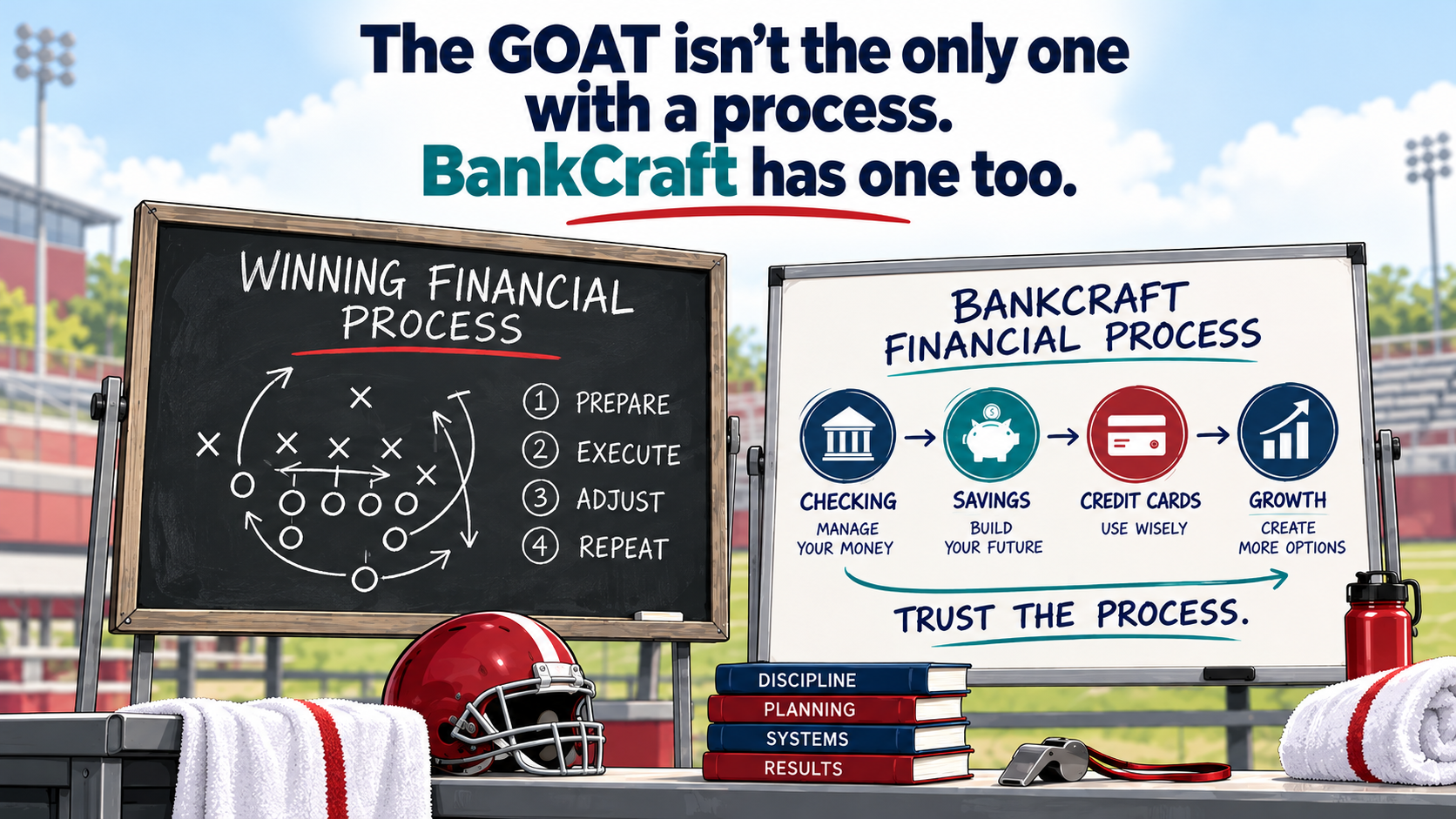
See how the BankCraft Protocols work together: assign jobs, test payment routes, automate, maintain backups, and adjust when something breaks. This isn't one-and-done. The playing field never stops moving.
Read the Real-World Case Study →Maybe you are just curious.
Maybe you have had the same financial institution for years and simply want to see what else is out there.
Maybe you are looking at your savings and thinking, "There has got to be something better than this."
Maybe you are ready to make your money work harder.
You do not have to do everything today. Nobody here is telling you that tomorrow at noon you need to withdraw all your money, close your accounts, move your direct deposit, and start over somewhere else.
That is not Bank on My Terms.
What we are suggesting is much simpler. Ask yourself what you are lacking. What do you wish your current financial institution did better? What would make your financial life easier? What would make your money work harder for you?
Once you have an idea of what you want to improve, go explore.
Maybe you want your savings to work harder. Maybe you want a better credit card, easier access to your money, better technology, or simply more choices.
You do not have to know how to evaluate all of that yet.
That is what BankCraft is here to help you learn.
We can help you figure out what you need, what questions to ask, and where to go next.
Take your time. There is no rush.
You do not have to build the whole thing today.
One brick might be checking what your savings is earning. The next might be finding one institution that looks better. Then you investigate it. Then you test it. Then, if it earns your confidence, you give it a job.
Lay one brick. Make sure it is solid. Then lay the next one.
Keep what works. Improve what does not. Add what is missing.
Nobody is going to knock on your door and say, "We noticed your savings is not earning very much. We would like to pay you substantially more."
You have to look.
And sometimes the search feels like a carnival game. The giant number is hanging there where everyone can see it. It looks easy. Then you get closer and discover the balance limit, the requirements, the fees, the qualifications, or some other detail that changes the deal.
That is why Bank on My Terms exists. We help you learn what to look for, what questions to ask, how to test what you find, and when to walk away.
Do not let the process overwhelm you. Take a break. Come back tomorrow. Have some fun with it. You are in control of how far you go and how quickly you get there.
You do not have to know exactly where this journey ends before you start. Choose the path that matches where you are right now.
Start with BankCraft. Think of it as the triage desk. It will help you narrow down what is working, what is not, and what you may want to improve.
Take Me to BankCraftGo to The BankCraft Method. It gives you the process for defining the jobs, scouting institutions, testing them, assigning roles, connecting the pieces, and adjusting over time.
Show Me the MethodHead to the Classroom. Use it as reference material for the problem in front of you, whether that is APY, ACH, account access, transfers, cards, or something else.
Open the ClassroomYou are fixing to go on a ride that could change your financial life.
How much you change is up to you. How far you go is up to you. Maybe you make one small improvement. Maybe you eventually rebuild the way you bank from the ground up.
You are in control. You are in the driver's seat.
We will show you what to look for, help you understand what you find, and give you tools to make better decisions. But you decide where you are going.